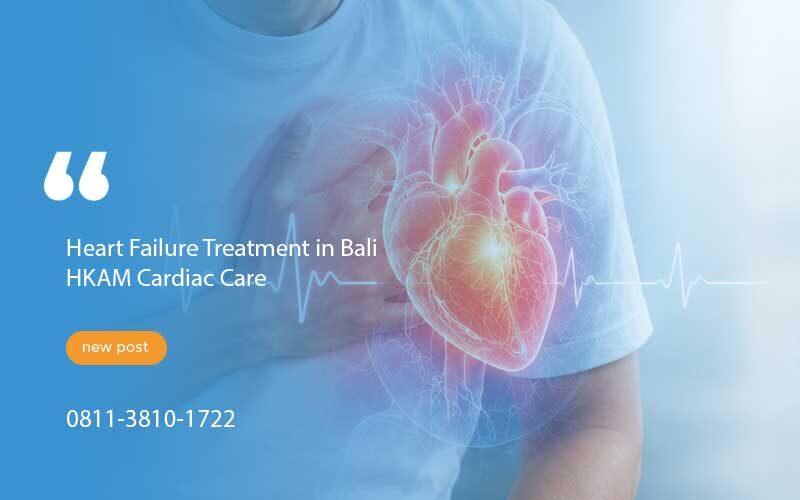
Heart Failure Treatment in Bali | HKAM Cardiac Care
Heart Failure Treatment in Bali – If you are experiencing shortness of breath, persistent fatigue, or swelling in your legs, a heart assessment can help identify the underlying cause. At HK Asia Medical Group (HKAM), we provide specialised cardiovascular care through Sapporo Cardio Vascular Clinic (SCVC) Indonesia at Bali International Hospital.
Our team evaluates each patient’s condition before discussing appropriate treatment options. This ensures that patients with suspected or diagnosed heart failure understand the next steps in their care.
What Is Heart Failure and How Is It Treated?
Heart failure occurs when the heart cannot pump blood effectively enough to meet the body’s needs or fill with blood properly.
It does not mean that the heart has completely stopped working. The condition can develop gradually or worsen suddenly, depending on its underlying cause and severity.
Treatment aims to relieve symptoms, improve daily functioning, reduce hospital admissions, and manage the underlying heart condition. Depending on the patient’s needs, care may involve medication, lifestyle adjustments, cardiac devices, catheter-based procedures, or heart surgery.
What Are the Signs That You May Need Heart Failure Treatment?
Heart failure symptoms can develop gradually and may resemble those of other medical conditions.
A cardiology assessment can help determine whether your symptoms are related to heart failure or another problem.
Watch for these common warning signs:
- Shortness of breath: Difficulty breathing during activity or when lying flat.
- Persistent fatigue: Feeling unusually tired during routine activities.
- Swelling in the legs or ankles: Fluid accumulation that may become more noticeable throughout the day.
- Rapid weight gain: A sudden increase in weight that may indicate fluid retention.
- Reduced exercise tolerance: Finding it increasingly difficult to walk, climb stairs, or complete daily tasks.
- Persistent coughing: A cough that may worsen when lying down, sometimes accompanied by breathlessness.
When is it an emergency?
Severe or sudden shortness of breath, chest pain, fainting, or blue or grey lips require immediate emergency medical assessment. Do not wait for a routine appointment if these symptoms occur.
What Causes Heart Failure?
Heart failure can result from several conditions that weaken the heart muscle, increase its workload, or interfere with normal filling and pumping.
Common underlying causes include:
| Underlying condition | How it affects the heart |
| Coronary artery disease | Reduced blood supply can damage the heart muscle. |
| Previous heart attack | Damaged heart tissue may reduce pumping function. |
| High blood pressure | Persistent pressure overload can cause structural changes in the heart. |
| Heart valve disease | Abnormal valves can make the heart work harder or disrupt blood flow. |
| Cardiomyopathy | Disease of the heart muscle can affect its ability to pump or relax. |
| Heart rhythm disorders | Abnormally fast, slow, or irregular rhythms may impair cardiac function. |
Identifying the underlying cause is an important part of treatment planning. Some causes can be treated directly, while others require long-term management to control symptoms and reduce further damage.
Heart Failure Treatment in Bali

How Do We Evaluate Heart Failure at HKAM?
At SCVC Indonesia, our approach begins with understanding the patient’s symptoms, medical history, and current heart function before discussing a treatment plan.
The assessment may include:
- Cardiology consultation: Reviewing symptoms, medical history, current medications, and relevant risk factors.
- Electrocardiogram (ECG): Recording the heart’s electrical activity to identify rhythm abnormalities and other findings.
- Echocardiography: Using ultrasound to assess heart structure, pumping function, and valve function.
- Blood tests: Checking relevant markers and assessing factors that may contribute to symptoms or affect treatment.
- Additional cardiac investigations: Depending on the findings, the cardiologist may recommend further imaging or other tests to clarify the diagnosis.
Not every patient needs every test. The cardiologist determines which investigations are appropriate based on the clinical assessment.
What Treatment Options Are Available for Heart Failure?
Heart failure treatment depends on the underlying cause, the heart’s pumping function, symptom severity, and other medical conditions.
Our team can assess the available options and determine whether medication, a procedure, or a combination of treatments should be considered.
Medication and Medical Management
Medication is an important part of managing many types of heart failure. Depending on the patient’s condition, treatment may include medicines that support heart function, reduce fluid retention, control blood pressure, or manage related cardiovascular conditions.
Some patients require several medications with carefully adjusted doses. Regular follow-up helps the treating team monitor symptoms, blood pressure, kidney function, electrolyte levels, and treatment tolerance.
Cardiac Devices
Selected patients may benefit from an implanted cardiac device.
- Cardiac resynchronisation therapy (CRT): Helps coordinate ventricular contractions in eligible patients with heart failure and specific electrical conduction abnormalities.
- Implantable cardioverter-defibrillator (ICD): Detects and treats certain dangerous heart rhythms in patients who meet clinical criteria.
These devices are not suitable for every patient with heart failure. A cardiologist evaluates heart function, rhythm findings, medical history, and guideline-based indications before recommending implantation.
Catheter-Based Procedures and Heart Surgery
When heart failure is associated with coronary artery disease or structural heart problems, treating the underlying condition may be necessary.
Depending on the diagnosis, options may include coronary intervention, valve procedures, or heart surgery.
Some patients with significant mitral valve leakage may be considered for a transcatheter edge-to-edge repair (TEER), while selected patients with severe aortic valve disease may be assessed for transcatheter aortic valve implantation (TAVI).
These procedures address specific underlying conditions rather than heart failure in every patient. Our cardiology team can assess whether further specialist evaluation is appropriate.
How Does the Heart Failure Treatment Process Work?
Treatment usually involves several stages rather than a single procedure. The exact pathway depends on the patient’s symptoms, test results, and medical stability.
| Stage | What to expect |
| Initial consultation | Discuss symptoms, medical history, and previous diagnoses. |
| Diagnostic assessment | Complete the tests recommended by the cardiologist. |
| Treatment planning | Review suitable medication, procedures, or device options. |
| Treatment and monitoring | Begin the agreed treatment and monitor the clinical response. |
| Follow-up care | Review symptoms, medication tolerance, and heart function as needed. |
For patients with acute or worsening heart failure, immediate hospital assessment may be necessary. Treatment should not be delayed while waiting for a routine outpatient appointment if symptoms are severe.
How Much Does Heart Failure Treatment Cost in Bali?
The cost depends on the type of care required. An outpatient consultation and diagnostic assessment generally cost less than hospital admission, advanced cardiac procedures, or surgery.
Your total treatment cost may depend on:
- Cardiologist consultation and diagnostic tests.
- Medication and follow-up appointments.
- Hospital admission and monitoring, if required.
- Cardiac devices or catheter-based procedures.
- Surgery and post-procedure rehabilitation, when indicated.
We recommend contacting our team for a cost estimate based on your symptoms, diagnosis, and proposed treatment plan.
An individual estimate is more useful than a single advertised price because heart failure treatment can involve very different levels of care.
Contact HKAM Admin: 0811-3810-1722
How Can You Manage Heart Failure After Treatment?
Heart failure often requires ongoing management even when symptoms improve. Following the treatment plan and attending follow-up appointments can help the medical team identify changes early.
Practical steps may include:
- Take medication as prescribed: Do not change doses or stop treatment without medical advice.
- Monitor symptoms and weight: Report sudden weight gain, increasing swelling, or worsening breathlessness to your care team.
- Follow dietary guidance: Your doctor may recommend limits on sodium or fluid intake, depending on your condition.
- Stay physically active when appropriate: Follow an activity plan recommended by your treating team.
- Attend regular follow-ups: Your medication, kidney function, blood pressure, and heart function may need periodic reassessment.
There is no single lifestyle plan suitable for every patient. Your cardiologist should individualise recommendations according to the severity of heart failure, other medical conditions, and treatment response.
Read Also: Pacemaker Implantation in Bali
Why Choose HKAM for Heart Failure Treatment in Bali?
Through SCVC Indonesia at Bali International Hospital, we provide cardiovascular care supported by specialist assessment, diagnostic evaluation, and multidisciplinary treatment planning.
Here is what patients can discuss with our team:
-
Specialist cardiovascular assessment
Review symptoms and clinical findings with a cardiology team.
-
Multidisciplinary care
Treatment decisions can involve relevant cardiovascular specialists according to the patient’s needs.
-
Diagnostic-led planning
Recommendations are based on clinical assessment and appropriate investigations.
-
Structural heart expertise
Our published service information includes specialised care for selected structural heart conditions.
-
Interventional cardiology
Patients can discuss whether a catheter-based procedure may be appropriate for an underlying cardiovascular problem.
-
Cardiac surgery services
Surgical assessment may be considered when the diagnosis and clinical indications warrant it.
-
Individualised treatment decisions
Treatment options are matched to the patient’s diagnosis, heart function, and overall health.
-
Clear clinical explanations
Patients can discuss the purpose, expected benefits, and potential risks of proposed treatment.
-
Hospital-based cardiovascular care
SCVC Indonesia is located within Bali International Hospital.
- Consultation coordination: Contact our team to ask about appointments, available assessments, and the next steps in your care.
Not every treatment or procedure is necessary or appropriate for every patient. The recommended approach depends on the cardiologist’s findings and the services available for the individual case.
What Are You Waiting For?
Discuss your symptoms with our cardiology team and explore personalised care options for heart failure treatment in Bali.
Contact HKAM Admin: 0811-3810-1722